
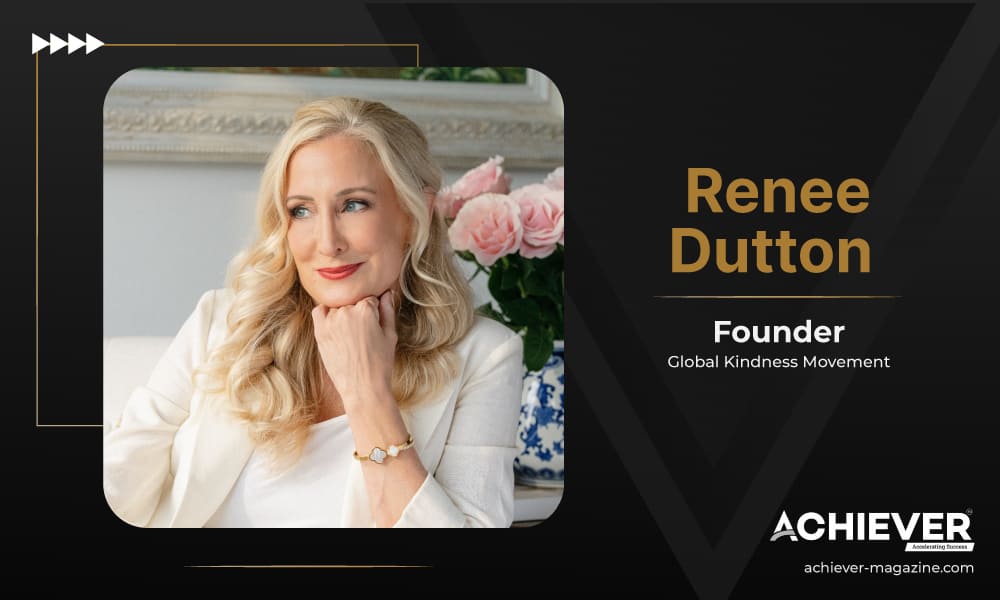
Renee Dutton: Turning Kindness into a Global Movement for Meaningful Change
In a world where technology has made communication easier but genuine human connection increasingly difficult, Renee Dutton believes one of the most powerful forces for positive change is also one of the simplest: kindness. As the Founder of The Global Kindness Movement, Dutton is working to make kindness a cultural norm that influences how people communicate, lead, work, and build relationships. Her journey toward this mission began with a simple encounter in a hotel lounge in Los Angeles about a decade ago. Dutton noticed a man working at a makeshift bar station who appeared extremely unhappy. Rather than judging him or walking away, she approached him, offered a genuine compliment, and made an intentional effort to be kind. She watched his mood change almost immediately. The experience stayed with her because it demonstrated how a few words and a small amount of attention could meaningfully change another person’s experience. It also raised a larger question: what could happen if kindness were viewed not as something optional or occasional, but as a powerful force capable of influencing individuals, relationships, workplaces, and communities?
Making Kindness Part of Everyday Culture
That question became the foundation of The Global Kindness Movement. Dutton’s vision is to make kindness something people naturally practice in their everyday lives, relationships, workplaces, communities, and leadership. She is building that vision through books, film, magazines, digital media, and cultural initiatives within companies and organizations. Storytelling plays an important role because personal stories can reach people emotionally and encourage them to see situations from another perspective. Dutton believes this is particularly important in a time when people can remain constantly connected through technology while still feeling isolated or unseen. For her, kindness is not simply about being nice or performing an occasional good deed. It is about becoming more conscious of how our words and actions affect others and creating environments where people feel acknowledged, respected, and valued. When kindness becomes part of everyday behavior, it can influence the culture that people create together.
Leadership Through Authenticity and Empathy
Authenticity is central to Dutton’s leadership philosophy. She believes the world does not need perfect leaders; it needs leaders who are willing to be genuine. In a culture where people often feel pressure to present an ideal version of themselves, leaders who are comfortable acknowledging challenges, uncertainty, and imperfection can create space for others to do the same. Dutton believes people connect with people, not perfection. When leaders combine authenticity with empathy and genuine care, they create environments where people feel comfortable contributing ideas, making mistakes, asking questions, and being themselves. Her approach to building a movement follows the same principle. The Global Kindness Movement is not about placing one individual above everyone else. It is about bringing people together around an idea that everyone can contribute to and reminding individuals that they each have the ability to make a difference.
Turning Kindness into Meaningful Impact
For Dutton, the real challenge is moving kindness from an inspiring idea into everyday behavior. Organizations may describe kindness as one of their values, but the more important question is whether people actually experience it in the workplace. This belief has led The Global Kindness Movement to develop corporate initiatives that encourage organizations to integrate kindness into their culture, communication, leadership, and employee engagement. The objective is not to create a one time campaign or a feel good message, but to establish intentional practices that influence how people interact and lead. The movement is also exploring ways to assess the impact of these efforts by looking at areas such as connection, relationships, and engagement. Dutton believes kindness should not simply be something organizations discuss. It should be something employees and communities experience in meaningful ways.
The Power of Stories and Collaboration
Dutton’s background in broadcast journalism has strongly influenced her understanding of leadership and social change. Journalism taught her the importance of listening and recognizing the human story behind every issue. She believes everyone has a story, and that stories can help people understand experiences that may be very different from their own.
This belief has become an important part of the movement’s work through books, films, magazines, podcasts, and digital platforms. Partnerships are equally important. Authors, filmmakers, business leaders, media organizations, companies, educators, and community leaders can bring different perspectives, audiences, and areas of influence to the mission.
Dutton recognizes that meaningful global change cannot be created by one person alone. When people share their own experiences of kindness, those stories can inspire others to act, creating a ripple effect that allows the movement to grow beyond its founder.
Empathy in a Divided World
Dutton believes empathy and kindness are especially important in a world experiencing division, stress, and disconnection. People can form strong opinions about one another without understanding what may be happening beneath the surface. Empathy creates an opportunity to pause and ask what another person may be experiencing that is not immediately visible. It does not require agreement or mean excusing harmful behavior. Instead, it means recognizing the humanity of another person. Kindness is where empathy becomes action. It can mean listening rather than judging, offering encouragement, giving someone grace, or simply treating another person with dignity and respect. Dutton believes people do not have to agree on everything to treat one another well. Greater understanding and more thoughtful interactions can influence individual relationships as well as the broader culture people create together.
A Movement Bigger Than One Person
Building a global movement requires patience, persistence, creativity, partnerships, and a willingness to continue when progress takes longer than expected. Dutton has learned that meaningful change takes time, and she approaches challenges by returning to the reason she started. She does not believe everything needs to happen at once. Instead, she focuses on taking the next meaningful step while remaining committed to the larger vision. Her long term goal is to see kindness become a natural part of everyday life in workplaces, schools, communities, families, and leadership. She envisions The Global Kindness Movement continuing to reach people through books, film, digital platforms, corporate initiatives, and partnerships while encouraging organizations and individuals to make kindness part of the way they operate.
Ultimately, Dutton wants the movement to become bigger than its founder. She wants people everywhere to recognize that they have the ability to influence the experiences of those around them. One act of kindness can change someone’s day, and that person may then treat someone else differently, allowing the effect to continue. Dutton does not believe one person can change the entire world alone, but she believes one person can change one interaction, one relationship, or one person’s day. When millions of people make that choice, the collective impact can become powerful.
That belief captures the essence of Renee Dutton’s leadership and the purpose behind The Global Kindness Movement. Her journey demonstrates that meaningful change does not always begin with a grand gesture. Sometimes, it begins with noticing another person, choosing not to judge, and offering genuine kindness. What started with a simple interaction in a Los Angeles hotel lounge has grown into a larger vision: to inspire people and organizations around the world to recognize the influence they have on one another and to make kindness part of the culture they create.


