
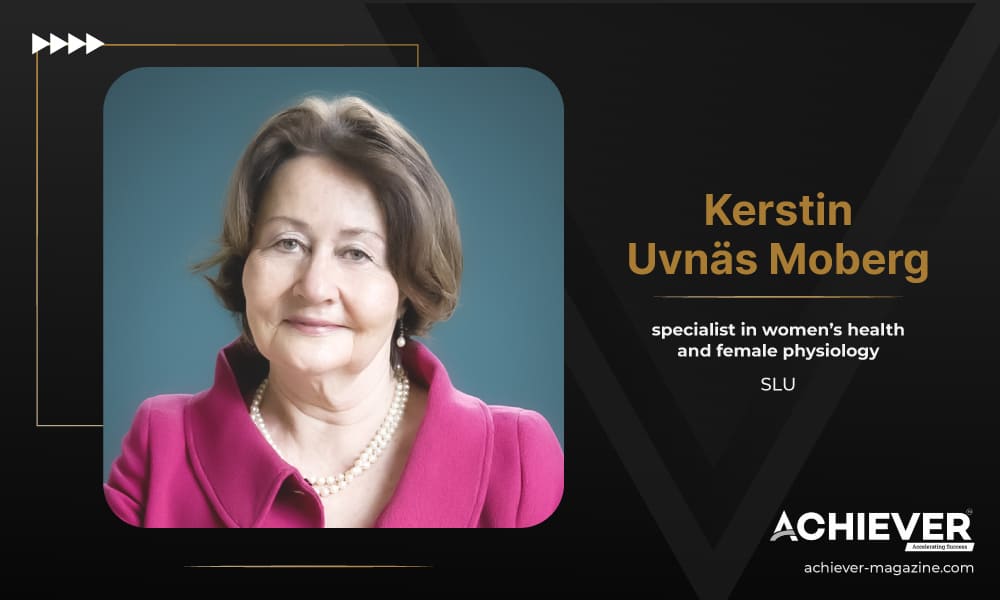
Kerstin Uvnäs Moberg: Destined to Redefine Care, Science, and Connection
Some questions do not come from textbooks or laboratories, they emerge quietly, after doors close and explanations are never fully given. They arise in the space between merit and opportunity, between ability and permission. Over time, these unanswered moments begin to reveal patterns that those on the inside often fail to see.
Long before her work reshaped how we understand physiology, care, and the biology of connection, Kerstin found herself confronting systems that were opaque, inconsistent, and quietly exclusionary. Repeated denials, unspoken assumptions, and institutional decisions rooted more in tradition than reason exposed a deeper truth: that scientific progress is not shaped solely by evidence, but also by who is allowed to participate. Questions surrounding womanhood, motherhood, and intellectual legitimacy lingered where clarity should have existed.
Rather than accepting these silences, she followed them. What began as personal curiosity evolved into rigorous inquiry and an insistence on understanding why so few women occupied scientific spaces, why unconventional thinking was met with resistance, and why care, biology, and empathy were so often dismissed as unscientific. In pursuing answers others overlooked, she illuminated what many did not yet know: that science itself is shaped by culture, and that expanding who belongs within it expands what science can become.
This is where the story of Kerstin Uvnäs Moberg begins not with certainty, but with the courage to ask questions others did not know they were avoiding.
A Journey into Science, Motherhood, and the Questions Others Didn’t Ask
Kerstin does not describe her commitment to women’s health and physiology as an early or predetermined calling. Instead, her perspective evolved gradually over time. It was not until the age of forty after a decade of working as a physician and serving as a PhD and associate professor in Physiology and Pharmacology that her motivation to focus on women’s health truly emerged. The combined experience of raising four children and encountering professional resistance became decisive forces in shaping her mission to expand scientific knowledge and understanding of women’s health and female physiology.
Background: Kerstin was born in 1944 in Lund, southern Sweden, and moved to Stockholm around the age of ten. The relocation followed her father’s appointment as Professor of Pharmacology at the Karolinska Institute. A young and ambitious physician, he went on to achieve significant scientific success, later serving as Dean of the Karolinska Institute and Chairman of its Nobel Committee. The family lived in a large, welcoming home managed by her mother, which was frequently filled with international visitors from the scientific community. Years later, as Kerstin attended conferences herself, she often encountered colleagues who remembered having once been guests in her childhood home.
Why She Became a Physician: Her decision to study medicine was guided by practical and contextual factors rather than a singular calling. Her father naturally served as a role model, though he never pressured her to pursue medicine. In addition, she excelled academically, and at the time, admission to medical school in Sweden was highly competitive, reserved for students with outstanding grades. As a result, many academically strong students including Kerstin chose medicine despite being uncertain about their long-term professional direction.
Why She Became a Scientist: After completing her medical studies, Kerstin practiced as a physician across several medical disciplines. A pivotal shift occurred when she became a parent for the first time. Married to a surgeon, she quickly recognized the difficulty of balancing two demanding medical careers with the responsibilities of raising young children. At the time, childcare options were limited, and although women were encouraged to pursue education and careers, they were simultaneously expected to manage household responsibilities reflecting the societal norms of that era.
In response, Kerstin developed a strategic plan: she decided to temporarily step away from clinical practice and pursue doctoral research at a preclinical institution while her children were young. This path offered greater flexibility while allowing her to continue progressing professionally, a challenge faced by many women at the time. After discussing the decision with her father, she began her doctoral research at the Department of Pharmacology at the Karolinska Institute, then one of the most prominent and successful scientific institutions in Sweden.
Although her doctoral work was not directly connected to women’s health or physiology, the decision proved invaluable. During this period, she acquired a strong foundation in pharmacology and physiology through teaching medical students, conducting animal experiments, measuring hormone levels, analyzing data, and writing scientific papers. These skills later became central to her groundbreaking work in female physiology.
Kerstin was assigned a supervisor and began a doctoral program in physiological gastroenterology, focusing on the function of the stomach and intestines. Her specific research examined how the vagal nerve connecting the brain to visceral organs regulates gastric acid secretion, as well as how gastrin, a hormone produced in the stomach, is controlled by the vagal nerve and influences acid production. After four years of research, she successfully defended her doctoral thesis in 1976.
From Motherhood to Molecular Insight: Rewriting the Physiology of Care
After earning her PhD, Kerstin chose not to return to clinical practice. By that point, she had become deeply engaged in research and remained at the institution, continuing her work on gastrointestinal physiology. During this period, she gained insights that would later prove foundational for her shift toward female physiology. She learned that several intestinal hormones promote digestion, nutrient storage, and growth, revealing how closely gut hormones are linked to nutrient assimilation and developmental processes. She began to view the gut as comparatively “female” in its functions focused on nourishment, growth, and restoration contrasting it with the more “male-associated” adrenal gland, central to the stress response. Given the heightened nutritional demands of pregnancy and breastfeeding, she also noted a potential connection to the higher prevalence of eating disorders among women.
Her and other’s research further showed that intestinal hormones signal satiety to the brain, inducing feelings of fullness mechanisms that later became central to weight-loss medications such as GLP-1 analogues. She also engaged deeply with the work of Ivan Pavlov, whose studies demonstrated that gastrointestinal processes could be conditioned by external stimuli such as light or sound. This principle of conditioned physiological response would later become highly relevant to her understanding of oxytocin, where early physical contact initiates responses that can later be activated through sensory cues alone, such as visual recognition.
Kerstin thrived in the research environment. She enjoyed every aspect of scientific work reading, writing, experimenting, and analyzing results. Her work gained international recognition, leading to numerous publications, invitations to conferences, and promotion to associate professor.
Like many young researchers, she planned to pursue postdoctoral training in the United States. Arrangements were made for her family, including a baby, to accompany her. However, she received a letter rescinding the opportunity, marking the first time she encountered explicit professional resistance due to motherhood. This moment became a turning point. Instead of traveling abroad, she began an inward scientific journey, translating her lived experience as a mother of four into physiological inquiry. She gradually lost interest in gastrointestinal function in isolation and redirected her research toward female physiology, using the methodological and conceptual tools she had developed. Her new research began with investigations into the role of the vagal nerves and gut hormones in breastfeeding.
Shortly thereafter, a colleague at a conference in California suggested that oxytocin, the hormone traditionally associated with labor and milk ejection, might explain the gut-related effects she had observed during breastfeeding. This insight led her to recognize the central and coordinating role of oxytocinergic neural pathways in the brain. From that point onward, oxytocin became the core focus of her research.
Kerstin went on to study when and how oxytocin is released and its wide-ranging behavioral and physiological effects. She demonstrated that oxytocin’s effects are largely similar in females and males, challenging the notion that it is a “female hormone.” Her work showed that oxytocin plays a critical role in growth by stimulating cell division, wound healing, and child growth and development partly through vagal pathways that regulate gut hormones and nutrient availability. She also identified oxytocin’s ability to inhibit fear, pain, inflammation, and stress, while promoting social interaction. She described this integrated pattern of effects as the “calm and connection response,” positioning it as a functional counterpart to the well-known fight-or-flight stress response.
She further linked the health-promoting effects of touch, sensory stimulation, social interaction, and manual therapies to oxytocin release. In later years, her research expanded to include oxytocin’s adaptative effects on behavior and physiology, via nerves in the brain in pregnancy, labor, skin-to-skin contact after birth, and breastfeeding, examining both immediate and long-term health effects.
More recent findings by other researchers, showing that oxytocin inhibits enzymes that suppress oxytocin gene expression, further reinforced its significance. These mechanisms explain why oxytocin’s effects can be long-lasting, potentially influencing aging processes and lifelong health, particularly if oxytocin release is supported early in life. Social interaction becomes health promoting throughout life via its connection with oxytocin and the calm and connection system.
Alongside her scientific work, Kerstin developed a strong interest in gender equality in research. She was invited to establish the first gender equality committee at the Karolinska Institute, an invitation she accepted. This role allowed her to systematically examine why so few women pursued or remained in scientific careers. She questioned whether patriarchal structures limited access, whether women were forced out mid-career, whether family responsibilities influenced career choices, or whether societal expectations shaped perceptions of suitability for scientific work. Through research and institutional initiatives, she helped develop structures and practices aimed at supporting women in science and advancing gender equity within academia.
Challenging the Boundaries of What Science Allows
Kerstin recalls that she encountered little to no skepticism while working within what were considered traditional and well-established research areas, such as gastrointestinal physiology and the vagal nerves. During this period, her work was met with positive feedback and generous financial support. Resistance first appeared when she planned a postdoctoral stay abroad with her family, including a baby, an opportunity that was ultimately withdrawn, marking her first direct experience of professional exclusion linked to motherhood.
More sustained skepticism emerged when she shifted her research focus to breastfeeding, female physiology, and particularly oxytocin. From that point onward, attaining a professorship became increasingly unattainable. Her research did not align neatly with existing academic categories, and this lack of conformity worked against her. She suspects that her involvement in establishing and contributing to the gender equality committee at the Karolinska Institute may also have contributed to the resistance she faced. She was repeatedly deemed unsuitable for professorial positions and was even portrayed negatively in a public article written by two professors from her own institution in one of Sweden’s major daily newspapers.
At the same time, her work attracted strong support from a diverse group of collaborators predominantly women, but not exclusively. Kerstin was approached by a large group of female medical students who wanted to make a doctoral thesis with her as a supervisor. They had been inspired by the lectures that Kerstin gave for the medical students, and which involved her new findings about oxytocin, social interaction and female physiology. Pediatricians, psychiatrists, psychologists, and other healthcare professionals recognized the potential significance of oxytocin and began working with her. While medical science had already made major advances in improving the safety of pregnancy and childbirth for both mother and child, Kerstin noted a striking absence in medical education: during her own training, she had never been taught about the positive physiological effects of spontaneous vaginal birth, early mother–infant contact, or breastfeeding. These female competencies and their benefits were largely absent from medical textbooks. Midwives and nurses managed these processes, while physicians were rarely involved, resulting in a lack of physiological research led by doctors in these areas.
Kerstin had come to understand oxytocin as an ancient and fundamental substance regulating many aspects of reproduction not only uterine contractions and milk ejection, but also a wide range of behavioral and physiological adaptations. Through collaboration with research-oriented midwives, she initiated a long-lasting and highly productive partnership to study oxytocin’s role in female reproduction from a holistic perspective. This work incorporated behavioral, psychological, and physiological measurements, as well as experiential accounts and led to numerous doctoral theses and scientific publications.
She emphasizes that this knowledge is valuable not only for midwives but for all healthcare professionals, as it provides a physiological foundation for the positive effects of personal care. Such understanding, she argues, also enhances the self-esteem and professional recognition of those working in caregiving roles.
When asked what sustained her motivation, Kerstin offers several answers. At the most basic level, she finds her work deeply engaging and derives genuine satisfaction from pursuing it. Beyond that, she believes research on nurturing, bonding, and the biology of wellbeing is critically important. Female physiology remains insufficiently explored, a gap tied not only to women’s rights but also to aspects of female identity particularly motherhood which remains undervalued in many societies.
She also points to the broader implications of this research for developing care practices that better support women during reproductive periods and potentially improve long-term health outcomes for both mothers and children, with effects that extend to population health.
Finally, Kerstin underscores the importance of including women’s perspectives and voices in science. She notes that scientific inquiry benefits from diverse approaches: some researchers are narrowly focused and detail-oriented, while others adopt a broader, more integrative perspective. often linked to observation of similarities and patterns. The former approach tends to dominate academia, while the latter more commonly represented by women is often undervalued. She herself was criticized for lacking focus when applying for professorships because of her tendency to look at problems at a more comprehensive level, think laterally and address multiple interconnected questions. Yet she maintains that scientific progress depends on the coexistence of both approaches. Without such breadth of perspective, she argues, it would not have been possible to uncover the parallel adaptive effects of oxytocin on both mind and body during pregnancy, birth, and breastfeeding as well as the “basic functional similarity” between reproduction of cells, wound healing and female reproduction and common connection with oxytocin”.
Rewriting Physiology Through Care, Connection, and Courage
Kerstin has built an extraordinary and sustained academic career marked by productivity, mentorship, and influence across disciplines. To date, she has authored approximately 500 scientific articles and book chapters, along with several books that translate rigorous science into accessible knowledge for readers without medical training. She has supervised 30 doctoral students from a wide range of professional backgrounds and continues to publish actively through her involvement in multiple European research networks (COST Actions), where reproductive physiology data are integrated, evaluated, and synthesized.
Writing and reading remain central to her scientific life, allowing her to stay continuously engaged with developments in the field. She travels frequently, particularly within Europe and delivers lectures worldwide, both in person and online. In parallel, she regularly participates in interviews with journalists and other media outlets, contributing to public understanding of physiology, wellbeing, and women’s health. She continues to supervise doctoral students and places strong emphasis on sharing her expertise with long-term collaborators with whom she maintains close professional relationships.
Alongside her academic research, Kerstin has contributed to the development of pharmaceutical applications based on oxytocin, including treatments for menopausal conditions. One such innovation is an oxytocin-containing vaginal gel designed to treat atrophy of vaginal mucosa, a common cause of discomfort and irritation during intercourse in menopause. Placebo-controlled clinical studies have shown that this treatment restores mucosal function, with preliminary findings also indicating improvements in overall wellbeing.
Finding Fulfillment Beyond Resistance and Recognition
A central theme in her work concerns the neurohormonal mechanisms affecting women during pregnancy, childbirth, and breastfeeding. She emphasizes that these behavioral and physiological adaptations are not incidental but serve critical biological purposes: supporting maternal behavior, protecting the fetus and newborn, and strengthening mother–infant bonding. Oxytocin plays a key role in these processes. Kerstin argues that motherhood-related adaptations should be recognized, valued, and supported rather than minimized or overlooked.
Her research demonstrates that oxytocin promotes social closeness with familiar individuals while reducing interest in unfamiliar or potentially stressful environments. Physical proximity and breastfeeding exert calming effects and strengthen bonds, while emotional and practical support from trusted individuals often described as the “doula effect” can ease pregnancy and childbirth due to their association with oxytocin. She has also shown that early and sustained skin-to-skin contact after birth may strengthen the oxytocin system, with potential long-term health benefits for both mother and child that may last a lifetime.
Kerstin maintains that the positive effects mediated by oxytocin represent significant medical and physiological findings that should be acknowledged by healthcare professionals, mothers, and policymakers alike. She advocates further research into the benefits of continuity of care and close contact during pregnancy and childbirth. A particularly urgent question emerging from her work concerns the consequences of postnatal separation or medical interventions that inhibit oxytocin release. Preliminary evidence suggests that reduced exposure to endogenous oxytocin may affect the long-term functioning of the oxytocin system in both mothers and infants, with potential implications for population health, an area she believes warrants much deeper investigation. Also, professionals in other types of medical care, should open their eyes to oxytocin and its beneficial effects, since such effects are associated with all types of care and medical practices when performed in an “oxytocin friendly manner”.
Her vision and mission have been shaped by both positive and challenging life experiences. On the positive side, she identifies her family of four children and ten grandchildren as a central source of meaning, learning, and inspiration. She also credits the support of students, collaborators, and colleagues who share her passion for these subjects as sustaining forces throughout her career.
Conversely, several negative experiences proved transformative. Being denied entry to the United States for postdoctoral work due to concerns that she would bring her family made her acutely aware of the structural barriers’ women, particularly mothers face in academic careers. This experience redirected her ambition and frustration into a focused scientific mission centered on female physiology. Repeated rejections for professorships further exposed the opaque and often primitive mechanisms underlying institutional decision-making. Over time, she came to recognize how difficult it can be especially for women to challenge established systems, where voicing concerns is often met with resistance and conformity is rewarded, even when rules are unjust.
Through these experiences, Kerstin discovered a defining personal strength: determination. Her capacity to envision future satisfaction and success has enabled her to persevere despite institutional barriers, sustaining a career that has reshaped understanding of oxytocin, care, and the biology of wellbeing.
Kerstin finds peace and fulfillment in many dimensions of life beyond scientific work. While writing remains a deeply calming activity that demands focused attention and allows her to momentarily set aside external concerns, she also derives profound satisfaction from spending time with her family, her children, grandchildren, and close friends. She enjoys cooking and hosting meals, surrounding herself with others through shared experiences. Nature holds a special place in her life; she has a deep knowledge of flowers (Kerstin has shown that the seeds of plants sprout and the plants themselves grow better by oxytocin) and takes pleasure in walking in natural settings, swimming when conditions allow, reading literature, listening to music, and solving puzzles. Many of these activities, she notes, are closely connected to activation of the oxytocin system.
She acknowledges that times have changed and that conditions for women in science are far better today than when she entered the field more than fifty years ago. Nonetheless, her own journey was marked by intense critique and, at times, deeply negative hostile judgments. She never fully understood the anger behind these reactions. Despite working diligently, applying rigorous scientific methods, and producing meaningful results, her research was often dismissed as inadequate. She experienced this as profoundly unfair. Even though she believed in the validity of her work, it was difficult not to internalize some of the blame, affecting both her quality of life and the intensity of her research efforts. Still, she persisted, recognizing in hindsight that perseverance, and perhaps a degree of stubbornness, became an essential strength.
Kerstin emphasizes that introducing new ideas into the scientific community is inherently difficult. She often recalls a remark by a respected scientist: when data are entirely novel, they may be ignored; when they are new yet interpretable within existing frameworks, they may provoke anger and resistance; and when they align with established thinking, they are met with approval and applause. This insight, she believes, reflects not only the challenge of grasping unfamiliar concepts but also the role of competition and immature emotional responses within scientific environments. Such reactions can be deeply discouraging.
Researchers who approach science from unique or non-mainstream perspectives often including women who pursue research guided by their own interests and insights are more likely to encounter resistance. Timing also plays a critical role; ideas dismissed as incorrect at one moment may later be recognized as valid or even foundational.
While she acknowledges that many factors contribute to the underrepresentation of women in senior academic positions, Kerstin offers a clear reflection shaped by experience: try not to internalize the negativity. Much of the criticism is not truly about the individual. Endurance matters, she believes, and with time, the value of the work often becomes evident.


