
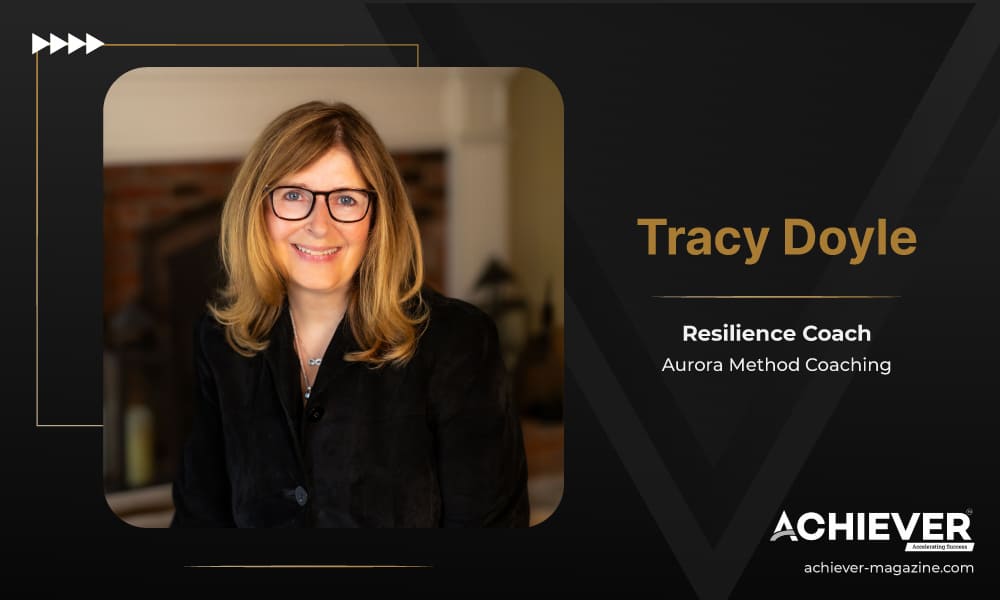
Tracy Doyle: Path to Emotional Freedom
The signs were always there, subtle patterns in reactions, repeated emotional cycles, moments of exhaustion that seemed to come from nowhere. But like so many others, Tracy Doyle didn’t recognize them for what they truly were. For a long time, it felt easier to believe that the problem existed outside circumstances, relationships, expectations. Until one defining realization shifted everything: it was never a “them” problem.
That moment of awareness became the turning point in Tracy’s journey, one that would eventually shape her work as an Emotional Wellness Advocate and Resilience Coach at Aurora Method Coaching. Drawing from the profound understanding that lasting change begins within, she embraced the idea that when unconscious beliefs are brought into conscious awareness, genuine change becomes possible. What once felt like emotional overwhelm began to reveal itself as a map guiding her toward clarity, healing, and self-mastery.
Today, Tracy channels that journey into helping others, particularly women who find themselves caught in cycles of emotional burnout and relationship struggles. Her approach is deeply personal and intentionally different. Rather than offering a one-size-fits-all solution, she empowers individuals to create their own mindfulness practices that reflect their unique beliefs, triggers, and lived experiences. It is this personalized path that makes her work not just impactful, but deeply meaningful.
Through Aurora Method Coaching, Tracy helps women uncover the deeper drivers behind their emotions and behaviors, break free from patterns that keep them stuck, and shift from reactivity to a place of calm, clarity, and confidence. Her mission goes beyond simply reaching more people; it is about reaching them in a way that creates genuine, lasting change.
Because for Tracy Doyle, emotional wellness isn’t just about feeling better. It’s about becoming better, stronger, more aware, and fully aligned with the life one is meant to live.
From Survival to Self-Discovery
Tracy’s journey began long before she had the language to describe it. She was born to a teenage mother with undiagnosed mental illness, the eldest in a large, impoverished family shaped by alcoholism. At the age of seven, her mother married an alcoholic, and within three years, his addiction stripped the family of even the most basic necessities: food, heat, and running water. They lived in squalor. With a mother unable to protect them, she stepped into the role of caretaker. At just ten years old, she would race boys in the schoolyard for their lunches to feed herself and her younger siblings.
Amidst this hardship, one person became her anchor, her grandmother, whom she lovingly called Mam. Mam instilled in her a belief that would shape her path forward: “Work hard, get an education, and you’ll get a good job and experience the good things in life.” She held onto those words with unwavering determination. In time, she became the first in her family to graduate from college, built a successful career in the pharmaceutical industry, and went on to found and lead an award-winning, multimillion-dollar company for over two decades.
Yet, the beliefs formed in that cold, unstable home never left her. The need to prove her worth, to do everything herself, and to sacrifice her own needs for others became deeply ingrained. While these beliefs fueled remarkable professional success, they also quietly led her into relationship conflicts and emotional bankruptcy.
From the outside, her life appeared ideal. She was a senior director, a high performer, and a woman who seemed to manage it all effortlessly. She was in a loving relationship, lived in a beautiful home, drove nice cars, and enjoyed luxury vacations. But beneath the surface, her reality was far more complex.
She carried the weight of being the caretaker for her mentally ill mother, who could not comprehend the financial strain of her decisions. She also became the parent figure for her sister’s two children, who had endured deeply traumatic experiences. The responsibility was immense, and over time, it began to take its toll.
Burnout crept in gradually. What began as stress evolved into crushing overwhelm . Like many women who strive to do it all, she responded by pushing herself even harder. The signs were everywhere, but she did not recognize them. She felt anger for never saying no, depleted from relentless demands, and found herself snapping at loved ones, strangers, and even at work. Beneath it all, she was drowning in guilt and shame. Despite achieving everything she had set out to accomplish, she felt an emptiness she could not ignore.
High performance had become her most sophisticated hiding place. It brought recognition and celebration, allowing her to outrun the deeply rooted beliefs that silently controlled her.
Everything came to a head on December 21, 1999. Catching a glimpse of herself in the
mirror eyes hollow, spirit dim she whispered, “I’m done.” That night, she came dangerously close to losing her life. But the next morning, through tears, she spoke words she had not said in years: “I want to live again.”
That breaking point became her turning point.
From that moment, the path toward healing, self-awareness, and transformation began ultimately giving rise to what would become Aurora Method Coaching, a reflection of her lived experience and a testament to the truth that what is shaped can indeed be reshaped.
From that moment, the path toward healing, self-awareness, and genuine change began. Over the next three years, she committed to her burnout recovery journey. And in 2002, that resilience carried her forward she founded what would become an award-winning, multimillion-dollar company that she led for over two decades, ultimately giving rise to what would become Aurora Method Coaching, a reflection of her lived experience and a testament to the truth that what is shaped can indeed be reshaped.
The Birth of a Transformational Framework
Tracy’s breaking point became more than a moment of survival, it became the beginning of deep, life-altering lessons. The first lesson she learned was profound: sacrificing yourself does not mean losing yourself. True strength lies in putting yourself first, even while managing everything and everyone else. For her, that meant seeking help. She turned to therapy, medication, self-help books, and retreats. Each offered support, each brought relief, but none created the lasting change she was searching for.
The second lesson reshaped her understanding of strength entirely. Vulnerability, she realized, was not weakness. It was courage. Choosing to trust a close friend, she opened up about what was truly happening beneath the surface. In response, her friend offered a perspective that would shift everything: her thinking, not her circumstances, was at the root of her struggles. Life experiences shape the way one thinks, and by learning to manage that thinking, it becomes possible to transform every relationship, including the one with oneself.
Guided through a self-assessment for the first time, she was challenged with an honest reflection of her own responses to how she reacted to pain, anger, and past hurt. What she discovered was both confronting and illuminating. Her patterns of overachievement, self-sacrifice, and emotional burnout were not random; they were deeply connected to her beliefs and the actions that followed. Those patterns had quietly fractured her relationships and distanced her from herself. That single moment of awareness changed everything.
It led her back to the psychological foundations she had once studied, particularly the work of Abraham Maslow, who revealed how unmet emotional needs from early life can leave individuals in a constant state of lack, and Carl Jung, who showed that bringing unconscious beliefs into conscious awareness gives us the power to change them.
For years, she had believed that external pressures and difficult people were the source of her burnout. What she uncovered instead was both confronting and freeing: it was not a “them” problem it was a “me” problem. The beliefs formed in her early life had been quietly shaping her reactions, decisions, and relationships for decades. Yet this realization was not devastating, it was liberating. Because if it began with her, it meant she had the power to change it. She was not broken. She was brave. From this understanding, the Aurora Method began to take shape.
Despite all the inner work she had done, she found that the same emotional storms would return over time — bringing with them reactions, frustration, and moments of overwhelm that impacted those around her. As a CEO, this was more than difficult; it carried a deep sense of shame and responsibility. She realized that while many tools offered temporary relief, what was missing was a sustainable way to shift perspective at its core.
The clinical understanding was clear: overcoming burnout in a lasting way requires a fundamental change in mindset and outlook. But knowing that and living it were two very different things. What she needed and what so many others needed was a structured, personalized framework that connected deep-rooted beliefs with everyday practice. So, she created one.
Named after the goddess of dawn, the Aurora Method is a psychology-informed, mindfulness-based framework built around eight core practices, ranging from Self-Awareness and Emotional Clarity to Conscious Action and Connection. It is designed to help women uncover the deeper drivers behind their relationship conflicts and emotional burnout, break free from unconscious patterns, and move from reactivity to a place of clarity, calm, and confidence both personally and professionally.
What makes the Aurora Method truly unique is its deeply personalized approach. Rather than offering a fixed path, it empowers each individual to create their own mindfulness practice, one that directly addresses their unique beliefs, triggers, and lived experiences. And when challenges resurface, as they inevitably do, they are no longer met with helplessness. Instead, individuals can return to these tools to reset, realign, and restore not just themselves, but the relationships that matter most.
Redefining Emotional Wellness and Leadership
There are many stories, but one remains etched above all others. Tracy was a woman who seemed to have it all: A loving partner, a beautiful home, a high-powered career, and a life that, from the outside, reflected success in every sense. She was admired for how effortlessly she appeared to manage it all. Yet beneath that polished exterior lived a very different reality, one marked by negativity, frustration, and a deep sense of disconnection from the people she loved most.
Through the Aurora Method, she began to uncover what had long remained unseen. What felt like constant irritation, her anger, impatience, and the ache of feeling unrecognized for all she did was not truly about others. It ran deeper. It traced back to two quietly embedded beliefs formed early in life: I don’t belong and No one emotionally supports me. These beliefs had shaped her reactions, her expectations, and her relationships without her even realizing it.
The moment she was able to see and name them, something shifted. Not because the people around her changed but because she did. Her relationship with her partner softened and strengthened. She found herself appreciating her in-laws in ways she never had before. The emotional distance that once defined her closest relationships began to close. In its place came connection, understanding, and a sense of personal fulfillment she had long been missing.
That is the essence of the work. It restores connection first within, and then with others. The impact of these realizations extends beyond personal relationships and into leadership as well sometimes in ways that are not easy to confront.
In her earlier years as a CEO, her leadership style was driven by the same beliefs that fueled her burnout. She relied heavily on herself, carrying the conviction that if she didn’t do something personally, it wouldn’t be done right. Asking for help felt uncomfortable, and trusting others fully felt out of reach. She became the leader who held everything together but in doing so, she unintentionally sent a message to her team: I don’t trust you.
Her personal transformation reshaped that understanding completely. She came to realize that great leadership is not about having all the answers, it is about creating the space for others to bring theirs. That vulnerability is not a weakness in leadership; it is the very foundation of trust. And that the most powerful act a leader can take is to look inward, acknowledge what isn’t working, and have the courage to change.
Today, she leads and coaches from that place of authenticity. Not as a guru, but as someone who has walked the path herself, someone who may be further along in the journey, yet remains deeply committed to walking alongside others every step of the way.
That shift from performing leadership to truly embodying it has transformed not only how she leads, but how she serves. And through that transformation, she continues to help women rediscover connection, clarity, and a way forward that finally feels like their own.
Redefining Emotional Wellness for a New Era
The conversation around mental wellness is shifting and Tracy believes the world is standing at a critical inflection point. Awareness is no longer the challenge. Today, people understand burnout. They can name it, recognize it, and speak about it openly. But what remains unsolved is far more important: how to move through it in a way that is lasting, deeply personal, and truly meaningful.
That is where she sees her role taking shape not as just another voice in the conversation, but as someone committed to building the infrastructure for real, sustainable change. Through the Aurora Method, she is creating pathways that extend far beyond individual transformation. By certifying coaches, she ensures the framework reaches more women across geographies and backgrounds. By partnering with organizations, she is bringing emotional wellness into the workplace reshaping how companies understand the connection between inner wellbeing and performance. Through media, speaking, and community, she continues to expand her reach so that even the woman who has never heard of this work can still find her way to it.
At its core, the movement she is contributing to is grounded in a simple but powerful truth: the beliefs that shaped us those that drive disconnection, division, and inner conflict can be reshaped. Healing is not about becoming someone new; it is about finding a way back to who we truly are. And that journey begins the moment we choose to look inward and rewrite the internal narratives that have been silently guiding our lives.
Her long-term vision reflects both ambition and intention scale with depth. It is not just about reaching more women, but about reaching them in a way that creates genuine, lasting change. She envisions a global community of women who have done the inner work and now illuminate the path for others. A growing network of certified Aurora Method coaches. A corporate wellness presence that transforms how organizations approach emotional health. And a body of work books, programs, and media that continues to inspire long after her own journey.
Yet beyond all of this, her deepest vision is profoundly simple and deeply human. It is the woman standing in an airport bookstore, picking up Life Storms, reading the first page, and feeling, perhaps for the first time: someone understands me. It is the woman who completes the Aurora Method Academy and finds the courage to call her estranged daughter after years of silence. And for every woman striving to lead with resilience, clarity, and purpose, her message is clear:
Do not wait for life to calm down before you begin. The clarity you are searching for does not exist on the other side of the storm; it exists within you, even now, in the middle of it. The moment you stop looking outward for answers and begin looking inward, everything starts to shift.
You are not broken. You are brave. And only you can lead your change. Because once, there was a ten-year-old girl who chose to rewrite her story. And so can you.


